How to Price an AI Product When Every Request Costs You Money: Credits, Seats and Usage
Work out what one request costs you, see why a flat plan breaks on heavy users, and choose between seats, credits, usage and outcome pricing, with examples from real AI pricing pages.
 Roman Shalabanov
Published
11 min read
Price an AI product from the bottom up. First work out what one typical request costs you in model fees. Then pick a unit customers can understand, such as a seat, a credit or a result. Price that unit so it covers your cost with a margin. Finally, add limits so one heavy user cannot turn a profitable plan into a loss.
Seats, credits and usage-based pricing can all work. What fails is a fixed price with unlimited use, because your bill grows with every request while revenue stays flat. Prices and plans below were read on the vendors' own pages on November 19, 2026.
Work out what one request costs you
Every AI feature has a unit cost. For a text model, it is the input tokens you send (system prompt, context, the user's text) plus the output tokens the model writes. On each of the five models below, an output token costs five times as much as an input token. If you have never counted tokens, our guide on how to count tokens and estimate your API bill shows the tools, and the Token Counter does it in the browser.
Take one request with 2,000 input tokens and 800 output tokens, an example size for a writing or support feature with a short system prompt. Here is what it costs on five models, using standard prices per million tokens from the vendors' pages.
Worked example: cost of one request (2,000 tokens in, 800 out), prices as of November 19, 2026
| Model | Input per 1M tokens | Output per 1M tokens | Cost per request | Cost per 1,000 requests |
|---|---|---|---|---|
| Claude Haiku 5.5 | $0.10 | $0.50 | $0.0006 | $0.60 |
| GPT-6.1 Terra | $1.00 | $5.00 | $0.006 | $6 |
| Gemini 4 Hydrogen | $1.50 | $7.50 | $0.009 | $9 |
| Claude Sonnet 5.5 | $2.00 | $10.00 | $0.012 | $12 |
| GPT-6.2 Astra | $8.00 | $40.00 | $0.048 | $48 |
Sources: OpenAI API pricing (short context, up to 272K input tokens), Anthropic pricing (Haiku 5.5 price for prompts up to 100,000 tokens) and Gemini API pricing (paid tier). The spread is 80 times between the cheapest and the most expensive model, for the same request.
The formula is simple:
cost per request = input tokens × input price / 1,000,000
                 + output tokens × output price / 1,000,000
Then add what the table leaves out. Reasoning or "thinking" tokens count as output: Google's price table says so in its column title, "Output price (including thinking tokens)". Retries add calls when a request fails. Tools cost extra: OpenAI lists web search at $10.00 per 1,000 calls plus the search content tokens. Storage, hosting and payment fees come on top.
Agents cost far more per task
An agent does not make one call. It loops: it reads the task, calls a tool, reads the result and calls the model again, and each step re-sends the growing context. Say a task takes 25 steps with an average of 30,000 input tokens and 600 output tokens per step. That is 750,000 input and 15,000 output tokens. On Claude Sonnet 5.5 it costs about $1.50 + $0.15 = $1.65 per task.
Prompt caching changes that number a lot. Anthropic lists cache hits on Sonnet 5.5 at $0.10 per million tokens, a twentieth of the normal input price, and 5-minute cache writes at $2.50. If 90% of each step's input comes from the cache and the rest is written to it, the same task costs roughly $0.07 + $0.19 + $0.15 = $0.41. OpenAI shows the same pattern: cached input on GPT-6.1 Terra costs $0.05 per million tokens instead of $1.00.
See why a flat price breaks on heavy users
Here is a labelled worked example. You sell a $20 a month plan for a writing assistant built on Claude Sonnet 5.5, with the request size above. Your model cost per user depends entirely on how much each person uses it.
Source: Worked example: 2,000 input and 800 output tokens per request on Claude Sonnet 5.5 at $2/$10 per million tokens, Anthropic pricing page, November 19, 2026
Show data
| User | Model cost |
|---|---|
| Light (100 requests) | $1.2 |
| Typical (500 requests) | $6 |
| Heavy (3000 requests) | $36 |
| Agent user (40 uncached tasks) | $66 |
The light and typical users leave a healthy margin. The heavy user costs $36 and the agent user $66, against $20 of revenue, before payment fees and hosting. A few such users can wipe out the profit from everyone else, which is why AI plans have usage limits.
Gross margin decides whether a plan works: revenue minus the cost of serving customers, model fees included. Our guide to MRR, churn and LTV for first-time founders explains why LTV must use gross margin, not revenue, and the SaaS Metrics Calculators run the formulas with your own numbers.
Choose the unit you charge for
There are five common units. Each one moves cost risk between you and the customer in a different way.
AI pricing units compared
| Unit | You charge for | Fits when | Your risk | Customer's risk |
|---|---|---|---|---|
| Seat | Each user per month | Value grows with people, usage per person is similar | Heavy users eat the margin | Paying for idle seats |
| Credits | A prepaid allowance in your own unit | Features cost very different amounts | Confusing credit rules | Hard to predict what a credit buys |
| Usage | Tokens, characters, minutes or requests | Developers, APIs, variable workloads | Revenue swings month to month | Bill shock |
| Outcome | A finished result, such as a resolved ticket | The result is countable and clearly yours | Disputes over what counts | Paying for low-value results |
| Hybrid | A seat or platform fee plus usage | Teams with mixed light and heavy use | More billing logic to build | Two numbers to understand |
Seats are easy for finance teams to budget, but for AI they work only when every seat also gets a usage limit. Outcome pricing is the easiest to sell and the hardest to define.
Learn from how known AI products price
These examples come from each vendor's pricing page, read on November 19, 2026. Treat them as patterns, not as price benchmarks.
- Seats plus rolling limits. Claude Pro costs $20 a month billed monthly ($17 a month billed annually), with usage measured "every 5 hours and every week". Standard Team seats cost $25 a month billed monthly. Claude Enterprise is a hybrid: "Seat price + usage at API rates", US$20 per seat per month billed annually, with a 20-seat minimum and usage that "scales with model and task" (Claude pricing).
- Credits instead of seats. Lovable Pro starts at $25 a month with 100 monthly credits. Its pricing FAQ says plans are "priced by the credits they include, not by seats", and inviting more people does not change the price (Lovable pricing).
- One credit pool across products. ElevenLabs gives each plan a monthly credit pool shared by every product, with published rates: text to speech costs 1 credit per character, speech to text 330 credits per minute and music 900 credits per minute (ElevenLabs pricing).
- Credits translated into output. Runway explains its credits in seconds of video: on Standard, "625 credits monthly = 52s of Gen-4.5" (Runway pricing).
- Seats plus credits for agents. Notion charges per member ($10 on Plus and $20 on Business, billed yearly), and Custom Agents are "free to try, then $10 per 1,000 monthly Notion credits" (Notion pricing).
- A usage pool with pass-through prices. Cursor plans include "a pool of AI usage" that refreshes weekly. After that you can buy top-offs, and third-party models are billed "at API list price" (Cursor pricing).
- Pure pay-as-you-go. Murf prices its API per unit: text to speech from $0.01 per 1,000 characters, with $10 of free credit to start and purchased credit that never expires (Murf pricing).
- Outcome pricing. Fin by Intercom costs $0.99 per outcome, charged at most once per conversation. You pay nothing if Fin cannot answer or the customer asks for a human. The page lists Intercom helpdesk seats at $19 a month on top (Fin pricing).
Design credits people can understand
Credits fail when nobody can tell what they buy. If you choose credits, make these decisions before launch and publish them on the pricing page.
- Anchor the credit to a real action. One credit per standard message, or per second of video, or per 1,000 characters. Show the conversion next to the plan, as Runway and ElevenLabs do.
- Price heavy features in more credits, not in a separate currency. An agent task that costs you 30 times a standard request should cost 30 credits. One balance is easier to understand than three.
- State expiry and rollover. Lovable's monthly plan credits expire two months after they are issued, while top-up credits last twelve months. Udio's monthly credits do not roll over. Murf's purchased credit never expires. Any of these can work if it is written down.
- Sell top-ups above your plan rate. Udio's Standard plan works out to about $0.004 per credit ($10 for 2,400 credits a month), while top-ups cost $3 per 100 credits. Top-ups let heavy users keep going without pushing everyone to a bigger plan.
- Show the balance and set caps. Show users how many credits are left before they run out. Teams need admin spend limits: Lovable lets owners set per-member credit limits, Claude Enterprise lets admins set user and organization spend limits, and Fin offers spending limits and alerts.
Protect your margin with limits, caching and routing
Pricing sets your revenue per user. These four levers set your cost per user.
- Limit by time window, not only by month. Most Claude plans measure usage per five-hour window and per week. Cursor's pool refreshes weekly, "so one heavy day never wipes out your whole month", as Cursor puts it. Shorter windows spread load and stop one user from burning a month of budget in a day.
- Cache the parts of the prompt that repeat. System prompts, documents and tool definitions repeat across calls. In the agent example above, caching cut the task cost from $1.65 to about $0.41.
- Route easy tasks to a cheaper model. Classification, short rewrites and extraction rarely need the top model. In the request table, Haiku 5.5 costs a twentieth of Sonnet 5.5 for the same request.
- Batch what can wait. OpenAI's Batch prices are half of standard: GPT-6.1 Terra drops to $0.50 input and $2.50 output per million tokens. Nightly reports, bulk tagging and backfills rarely need an instant answer.
To see which customers and features drive your model bill, log every call with its cost and a user ID. LLM gateways and observability tools such as Helicone, Portkey and LiteLLM track spend per request, and billing platforms can meter usage and charge for it.

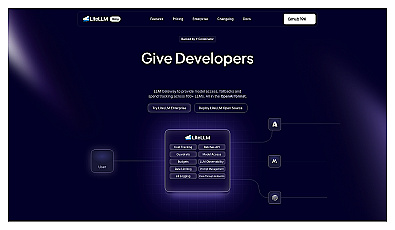
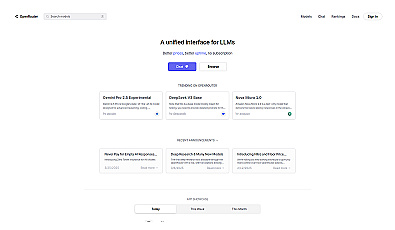
Access multiple large language models for diverse AI tasks.
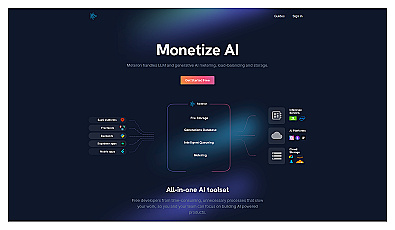
Resource management for AI development and deployment.
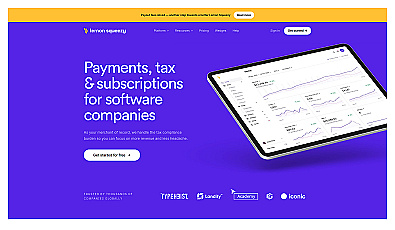
Streamlined payment processing for digital product sales worldwide.
Stripe and Lemon Squeezy both document usage-based billing for subscriptions, so you can report usage and charge for it without building a billing system yourself.
Set your first prices in seven steps
- Measure a typical request for each AI feature: input tokens, output tokens, tool calls. Use real logs if you have them, or a test set of 50 realistic inputs.
- Price each request with today's model prices and add 20–30% for retries, reasoning tokens and overhead. Treat that buffer as your own assumption and replace it with measured data later.
- Estimate usage at the 50th and 90th percentile per user per month. Before launch, run a beta and look at the spread.
- Pick a unit: seats for team tools with even usage, credits for products with many features of different cost, usage for APIs, outcomes when you can count results.
- Set the unit price from cost and target margin: price = cost per unit ÷ (1 − target gross margin). A $0.012 request at a 75% target margin needs at least $0.048 of revenue.
- Build the plans: a free tier with a daily cap, two or three paid allowances, top-ups, and an annual discount if you want cash up front.
- Review every month. Model prices change often, and Google lists some Gemini prices as valid "through November 30, 2026". When your costs fall, add allowance before you cut the price.
Using step 5 on the worked example: at $0.048 per standard request, a $20 plan covers about 400 standard requests. An uncached 25-step agent task would cost about 137 standard requests' worth of credits, and the cached version about 34. That gap is a good reason to build caching before you price agent features.
SaaS Metrics Calculators MRR, churn, LTV, CAC payback, LTV:CAC, Rule of 40 and customers to goal.FAQ
Should I charge per seat or per credit for an AI product?
Charge per seat when usage per person is fairly even and buyers are teams that budget per head. Charge in credits when features cost very different amounts or a few users use far more than others. Many products combine both: a seat price with a credit or usage allowance per seat.
How do I calculate the cost of one AI request?
Multiply input and output tokens by their prices per million tokens, add the two, then add tool calls and retries. Our guide on counting tokens shows how to measure the counts.
What gross margin should an AI product aim for?
There is no single right number. Pick a target, put model fees, hosting and payment fees into cost of revenue, and check the real figure monthly. Model fees lower your margin and with it your LTV, so run the LTV calculator with your actual margin.
Do credits have to expire?
No, but you must say what happens. Lovable's monthly credits expire two months after issue, Udio's monthly credits do not roll over, and Murf's purchased credit never expires. Write the rule on the pricing page and in the terms.