Customers to MRR Goal Calculator
Set an MRR goal and a price to see the customers you need and when you might get there.
Runs in your browser. Nothing is uploaded.
Paying customers you need
You are already there. At your current pace you reach the goal in about . At your current pace it takes more than 10 years. At your current pace you do not reach the goal.
Enter an MRR goal and the average monthly revenue per customer.
With new customers a month and churn, growth levels off at about customers ( MRR), where cancellations equal sign-ups. Win more customers each month or lower churn.
Formula
Customers needed = MRR goal ÷ revenue per customer, rounded up. Each month: customers × (1 − churn) + new customers.
Paying customers over time
Customers at your current pace Goal Plateau, where churn equals sign-ups
Related: Churn Rate & Retention Calculator, MRR & ARR Calculator
Embed this calculator
Paste this code into your site. The calculator stays free and up to date.
The formulas
Customers needed = MRR goal ÷ average revenue per customer per month, rounded up.
To estimate when you get there, the calculator repeats one step for each month:
customers next month = customers this month × (1 − monthly churn) + new customers per month
Churn sets a ceiling. When the customers you lose each month equal the customers you win, growth stops. That plateau is new customers per month ÷ monthly churn.
Worked example
| Input | Value |
|---|---|
| MRR goal | $10,000 |
| Average revenue per customer | $29 a month |
| Paying customers now | 50 |
| New customers per month | 25 |
| Monthly churn | 3% |
- Customers needed: $10,000 ÷ $29 = 344.8, so 345 customers.
- You need 295 more than you have today.
- Month by month, 3% of the base leaves and 25 join. The base passes 345 in about 16 months.
- To get there in 12 months instead, you need about 31 new customers a month.
The plateau here is 25 ÷ 3% ≈ 833 customers, well above the goal, so the goal is reachable. If you won only 5 customers a month at 5% churn, the base would level off at 100 customers and never reach 345.
How to read it
The curve bends because churn grows with the base. With 50 customers, 3% churn costs you one or two a month; with 345 it costs about 10, so the same 25 sign-ups add fewer net customers every month. That is why a goal that looks close can take longer than a straight line suggests, and why lowering churn often moves the date more than a small rise in sign-ups.
Common mistakes
- Using today's ARPA for a different customer mix. If new customers choose cheaper plans, revenue per customer falls and you need more of them.
- Assuming steady churn for new customers. Many products lose more customers in the first months than later. If so, the real path is slower than the estimate.
- Ignoring seasonality. Sign-ups rarely arrive evenly. Use an average over several months rather than your best month.
- Forgetting price changes. A price increase moves the goal closer without a single extra customer. Try a higher ARPA to see the effect.
Churn is the input that matters most here. Measure yours with the churn rate calculator.
Why does growth slow down as I get more customers?
Because churn is a percentage of the whole base. The more customers you have, the more you lose each month, so a fixed number of sign-ups adds fewer net customers over time.
What is the plateau?
The number of customers where monthly cancellations equal monthly sign-ups: new customers per month ÷ monthly churn. Without more sign-ups or lower churn, you cannot grow past it.
How many free users or trials do I need?
Divide the paying customers you need each month by your conversion rate from free or trial to paid. A lower conversion rate multiplies the traffic and sign-ups you need.
Can I plan for a deadline?
Yes. Enter the number of months in "Reach it within" and the calculator shows how many new customers you need each month, taking churn into account.
Does this include upgrades or price increases?
No. It assumes revenue per customer stays the same. Change the average revenue per customer to see how upgrades or a new price affect the goal.
Finance tools from our directory
Browse: Finance, Business, Analytics

AI-driven platform for trading research and strategy validation.
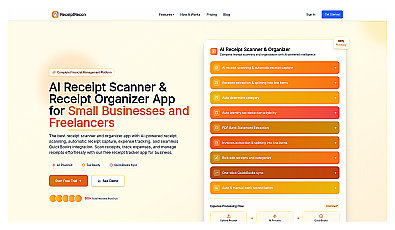
AI-powered scanner and organizer for receipts and expenses.
Advanced consumer data analysis for smarter marketing decisions.



Discover your ideal audience with targeted marketing strategies.