Churn Rate & Retention Calculator
Enter customers or MRR at the start and end of a period to get churn and retention.
Runs in your browser. Nothing is uploaded.
Customers
Count only customers who were paying at the start of the month.
Cancelled: + − = customers.
The end count is higher than start plus new customers. Check the numbers.
Revenue (optional)
Monthly customer churn
About of customers a year at this rate
Enter the customers at the start of the month and how many cancelled, or the start, new and end counts.
More customers cancelled than you had at the start. Check the numbers: customers who joined during the month are not part of the starting count.
Formula
Customer churn = customers lost ÷ customers at the start. Annual churn = 1 − (1 − monthly churn)12.
Gross revenue churn = (churned + contraction MRR) ÷ starting MRR. NRR = (start − churned − contraction + expansion) ÷ start.
What this churn means over 12 months
Customers left from today's base Revenue from them, if NRR stays at
Embed this calculator
Paste this code into your site. The calculator stays free and up to date.
The formulas
- Customer churn rate = customers who cancelled during the month ÷ customers at the start of the month.
- Retention rate = 1 − churn rate.
- Annual churn = 1 − (1 − monthly churn)^12.
- Average customer lifetime = 1 ÷ monthly churn.
- Gross revenue churn = (churned MRR + contraction MRR) ÷ MRR at the start.
- Net revenue retention (NRR) = (starting MRR − churned − contraction + expansion) ÷ starting MRR.
If you only know head counts, switch to "Start and end counts": cancellations are then start + new customers − end.
Worked example
You start the month with 400 paying customers and 12 of them cancel.
- Customer churn: 12 ÷ 400 = 3.0% a month.
- Retention: 97%.
- Annual churn: 1 − 0.97^12 = 30.6%. Not 36%: you cannot multiply a monthly rate by 12, because each month's churn applies to a smaller base.
- Average lifetime: 1 ÷ 0.03 ≈ 33 months.
On the revenue side, MRR at the start was $20,000. Cancellations removed $600, downgrades another $200, and upgrades from existing customers added $1,000.
- Gross revenue churn: ($600 + $200) ÷ $20,000 = 4.0%.
- Net revenue retention: ($20,000 − $600 − $200 + $1,000) ÷ $20,000 = 101%.
How to read it
Customer churn (also called logo churn) tells you how many accounts leave. Revenue churn tells you how much money leaves, and the two can differ a lot: losing ten small accounts hurts less than losing one large one. NRR above 100% means the customers you already had pay you more this month than last, even after cancellations. The chart shows both effects over a year if the rates stay the same.
What counts as a good rate depends on the market. Products sold to individuals and small businesses usually churn faster than software bought on annual contracts by larger companies, so compare yourself with businesses that sell the way you do.
Common mistakes
- Counting new customers in the base. Customers who joined during the month were not there at the start. Including them understates churn.
- Ignoring failed payments. Cards that expire and never get updated are churn too. Track them separately so you can fix them with reminders and retries.
- Annual contracts. Customers on yearly plans can only leave at renewal. Measure their churn per renewal, not per calendar month.
The churn rate feeds directly into customer lifetime value: try the LTV calculator next.
How do I convert monthly churn to annual churn?
Use 1 − (1 − monthly churn)^12. At 3% a month, 30.6% of customers leave over a year. To go the other way, monthly churn = 1 − (1 − annual churn)^(1/12).
What is the difference between customer churn and revenue churn?
Customer churn counts accounts, revenue churn counts MRR. Revenue churn also includes downgrades (contraction), which customer churn does not see.
Can net revenue retention be above 100%?
Yes. When upgrades, extra seats and usage growth from existing customers outweigh cancellations and downgrades, NRR goes above 100%, and revenue from your existing base grows on its own.
Should customers who signed up and cancelled in the same month count?
Not in this formula, because they were not in the starting count. Track early cancellations as a separate activation problem.
What is a good churn rate?
There is no single number. Compare with companies that have similar customers and contracts, and focus on whether your own rate goes down over time.
Finance tools from our directory
Browse: Finance, Business, Analytics
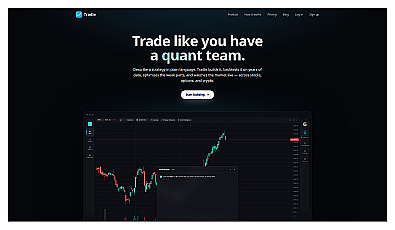
AI-driven platform for trading research and strategy validation.
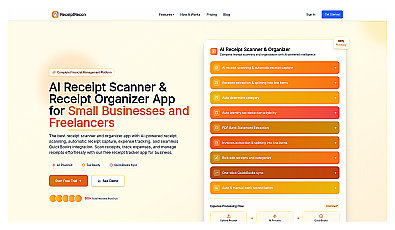
AI-powered scanner and organizer for receipts and expenses.


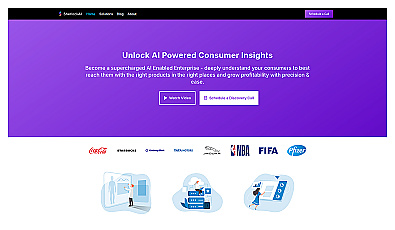
Advanced consumer data analysis for smarter marketing decisions.



Discover your ideal audience with targeted marketing strategies.